Industry Night: The Hardest Reservation in New York
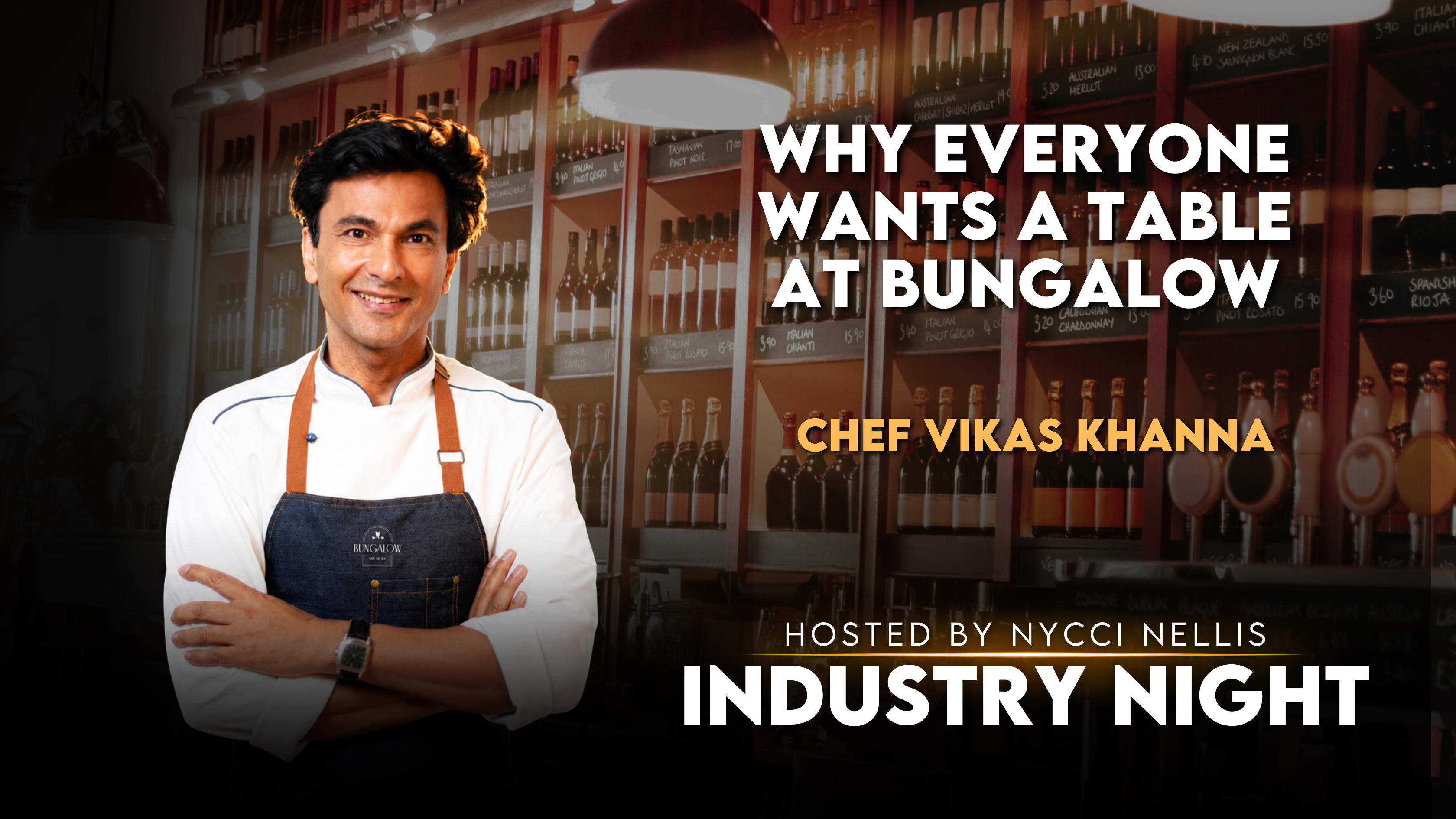
Chef Vikas Khanna built Bungalow, the hottest table in New York City, after arriving in America homeless. This is the DC food podcast conversation that explains everything.
Ten thousand people are on the wait list for Bungalow. Chef Vikas Khanna is not surprised. He did not open it to chase a reservation. He opened it at 54 as a promise to his late sister and his mother, to carry the full weight of Indian culture and cuisine into a dining room and set it free. If you follow the DC food and wine show, the Washington DC restaurant insider scene, or the hospitality industry podcast world, you already know guests like this do not come around every week. Chef Khanna was born with club feet in Amritsar, told he would never walk properly. He arrived in the United States with nothing. He earned a Michelin star at Junoon in 2011 and held it for eight consecutive years. He has authored more than 40 books, hosted MasterChef India for nearly two decades, directed films, spoken at the United Nations, and through Feed India, delivered more than 84 million meals to people in need. At Bungalow, he runs only 16 dishes, rotates specials nightly without repeating, and is currently running 36 weeks celebrating India, one state, one dish, one story per week. Nycci Nellis sat down with him and within five minutes understood why the New York Times used the word freedom to describe what he is doing. That word mattered more to him than any star.
What You Will Learn
Chef Vikas Khanna opened Bungalow not to earn another Michelin star but as a personal promise to his mother and late sister, and every element of the restaurant from the Ganga Jal ceremony to the floral ceiling carries that intention.
Khanna has documented more than 250,000 recipes from across India and distills that archive into a rotating menu of 16 dishes, proving that restraint and depth are not opposites in the DC dining guide conversation.
The women in his life, his grandmother, his mother, his sister, a Muslim woman who sheltered him during the Mumbai riots, and designer Sheila Rizvi, shaped every instinct he brings into the kitchen and the dining room.
Feed India grew from a single phone call from his mother during the pandemic and became an operation that converted 80 gas stations into food and healing stations for migrant workers and served hundreds of thousands of meals at Haji Ali Dargah during Eid.
Khanna argued in Time magazine that civilizational cuisines cannot be judged through the narrow lens of Western restaurant standards, and the chef interview podcast world is still catching up to what that means for Indian food globally.